Sustainable Vigilance

I have been thinking recently about how perfectionism paralysis can play out in our praxis, and specifically the ways it limits the effective action and organization of white leftists.
Because, yes: perfectionism is a tune and tool of white supremacy, and dismantling it is important inner work for those who wish to disentangle themselves from the overculture’s tendrils.
One thing that came to mind in my reflections on the topic of perfectionism paralysis was some guidance I once received from a former mentor of mine:
You don’t have to do everything every day related to this work. But you do have to do something everyday.
She was speaking specifically about spiritual practice, and how there are all sorts of things that can be done along our spiritual paths that are important to maintain a long-term connection to within our lives.
The problem was that I was getting overwhelmed and life was getting unmanageable because I was trying to do ALL the important things EVERY day: meditation, prayer, journaling, reading and writing (don’t forget poetry!), connecting with spiritual community, mindful movement, inner decolonization, adequate sleep, meaningful work, mutual aid organizing, maintaining connections to the more-than-human world and the rhythms of nature, scrying, creative outlets of expression, rituals, medicine making/herbalism,...
I was so overwhelmed from trying to do it all that I not only found it unsustainable, but I began to resent the very practices that were so precious, so foundational, so sacred.
So, that was the context of her message.
Her message provided me with the reminder that weaving spirituality into my lived every day life is ABSOLUTELY of vital and essential importance if I ever want a spiritual life that isn’t just lip-synced, but is actually embodied in how I live and show up relationally...
but that doesn’t mean I have to do every component of embodying a spiritual practice every single day/every moon phase/every wheel of the year holiday/etc/etc/etc. without having somehow failed myself, spirituality, or my spiritual path.
And the more I really integrate that truth into my life, the more effective I am at identifying which, of all the many possible options that are available to me, is likely to be the most effective way of embodying my spiritual practice in that moment/context/interaction.
I think this concept has carryover to praxis and organizing, not to mention the work of creating webs of community resilience and the imagining/building of a better future.
There is no day—
no season—
no moment when we are exempt from showing up in increasingly more skillful and committed ways of building more compassionate alternatives to the overculture.
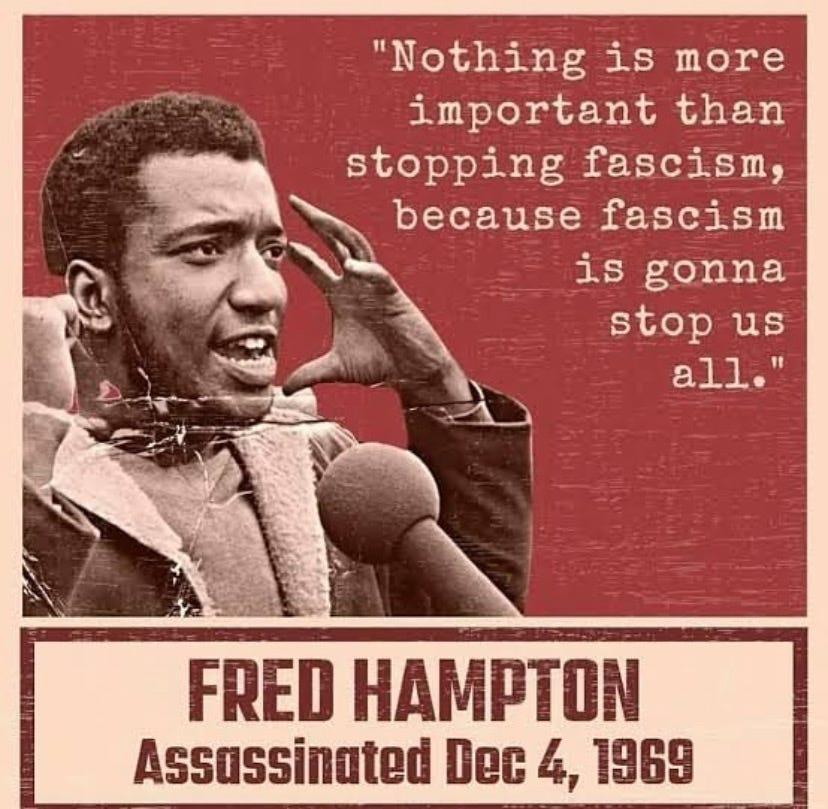
Now more than ever, we need to be embodying—doing—creating a better world through vigilantly resisting what needs to be resisted and loving what needs to be loved.
No one gets to exempt ourselves from this moment in history and how we show up for it.
That does not mean we have to do every single thing every single day.
Thinking that we do is what creates perfectionism paralysis, hopelessness, and the nihilism of Why even bother?! What can I even do about it?! Nothing, probably!!
We don’t have time or energy for whiling away days, weeks, months with that energy, stuck doing nothing because we can’t do everything.
We need to do what we are called to do in the moments of our lives.
We need to be triangulating that with our systemic points of privilege and access; our values; and our love for each other, the more-than-human world, and the future that we are fighting for.
We don’t need to do everything every day.
But we do have to do something.
Every day—
every moment—
every interaction—
every choice—
is an opportunity to embody our values, an opportunity to embody the path toward collective liberation.
I encourage everyone who finds their way to these words to lean into that deep inner part of themselves that wonders what they can possibly do right now, in the face of the immensity of white supremacist fascism surrounding us, that would be the most skillful way of responding to this moment.
Lean in, not away, from the emotions that come up. Face them.
Then, when you are face to face with them, ask yourself:
What do I need to be doing now, in this moment, with the skills/privileges/access points that I have, in order to more effectively build community resilience and create the foundation for a better future?
Beautiful.
Now go do it.
Then, in the moment that follows that, ask yourself the same question again,
and again,
and again.
The answers will change depending on the moment, the context.
The importance of doing something won’t.